Transformers have a vital part in the process of power generation, transfer, and delivery. Besides the core and winding components, their performance is also determined by the use of electrical insulation that ensures no short circuits, controls heating, and improves operation. Choosing the appropriate electrical insulation materials from RS Insulation increases the dielectric strength and lifespan of the device.
There are various kinds of insulation materials depending on the parameters of the transformer.
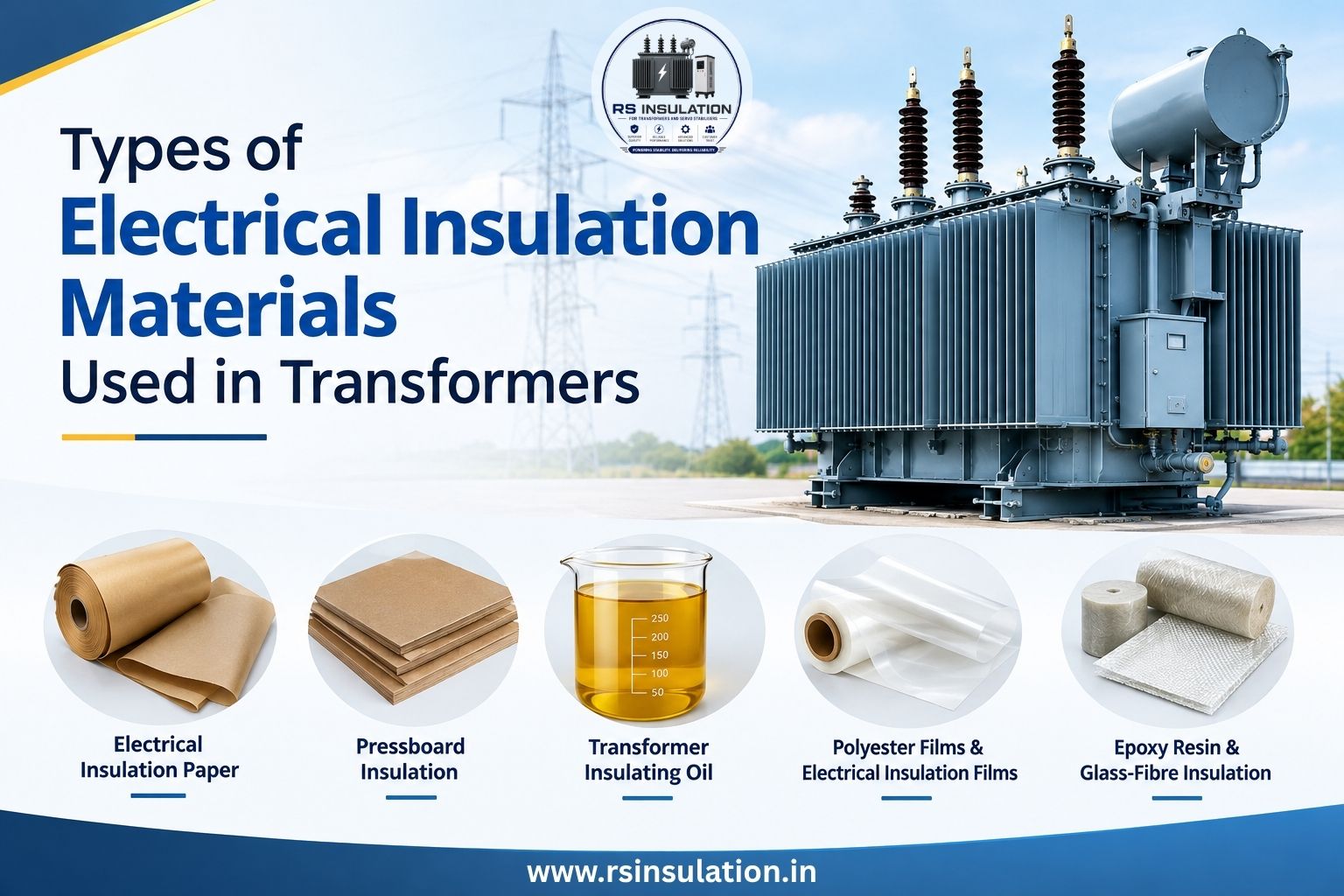
5 Common Types of Transformer Insulation Materials:
1. Electrical Insulation Paper:
It is commonly used in oil-filled transformers as an insulator for copper or aluminum windings. It is also used as an electrical insulator to provide separation between conductors.
- It is used for insulating the winding and separation between layers.
- It possesses excellent dielectric and flexible properties.
- It is normally made of cellulose material
2. Pressboard Insulation:
Electric pressboard is an electrically insulating material made from cellulose. It is used where there is a need for insulation that can withstand mechanical forces during service and transportation.
- It is used for winding spacers, barriers, cylinders, and end insulation.
- It offers physical strength and stability.
- It ensures that clearance requirements between high-voltage parts are met.
3. Transformer Insulating Oil:
The transformer oil plays two major roles: that of insulation and cooling.
- Serves as a dielectric insulation for energized parts.
- Cools the internal elements of the transformer by carrying the heat towards the cooling surfaces.
- Needs to be properly controlled for water content and filtered periodically.
4. Polyester and Electrical Insulation Films:
Polyester films are used in transformer winding insulation when there is need for thin and uniform dielectric films. Useful in insulating both adjacent conductors and also for insulation systems suited for certain temperatures.
- Can be used for both inter-layer and conductor insulation.
- Possesses high dielectric strength and dimensional stability.
- Selection is based on temperature rating.
5. Epoxy Resin and Glass-Fibre Insulation:
Epoxy resins and glass fiber composites are employed in dry-type transformers and certain high-voltage applications.
- They act as insulators as well as adding strength and resistance to mechanical strain.
- Used for cast-resin transformer insulation and associated supporting structures.
- Has outstanding mechanical and electrical properties.
- Can help protect the windings from environmental factors if properly designed.
How to Choose the Right Transformer Insulation Material?
Selecting insulation requires more than comparing material prices. Engineers should evaluate the complete insulation system based on operating conditions and transformer specifications.
Key factors include:
- Rating of Voltage: The material should be able to withstand the expected voltage stress.
- Thermal Class: The insulation material should be able to withstand the temperature rating of the transformer.
- Water Resistance: Water increases the dielectric constant of the insulation. This is particularly true if the insulation is composed of cellulose.
- Mechanical Strength: The materials used should withstand vibration, winding, and transport stress.
- Compatibility: Solid insulation and the insulating oil, among others, should be compatible.
Why Quality Insulation Matters in Transformers
Poor quality of the insulation and inappropriate choice may result in partial discharge, overheating, breakdown, and early destruction of the transformer. A proper selection of materials for insulation would reduce maintenance and provide a reliable supply of electricity.
It is important for the manufacturers of transformers to select a supplier of the insulation material which possesses sufficient experience.
Conclusion:
Electrical insulation materials have a vital significance in relation to safety, efficiency, and life expectancy of transformers. Ranging from insulating paper to insulating varnishes, the usage of every material has some logic to it. There are various parameters that affect the decision for the selection of material.
Frequently Asked Question(FAQs):
1. What are the different types of electrical insulation materials used in transformers?
The common electrical insulation materials used in transformers include electrical insulation paper, pressboard, transformer insulating oil, polyester films, epoxy resin, and glass-fibre composites. The choice depends on the transformer type, voltage rating, and operating temperature.
2. Why is pressboard used in transformer insulation?
Pressboard is used in transformers to provide electrical insulation and mechanical support. It is commonly used for spacers, barriers, cylinders, and other components that maintain proper separation between electrical parts.
3. What is the purpose of transformer insulating oil?
Transformer insulating oil provides electrical insulation and helps remove heat from the windings and core. It also supports the insulation system by filling gaps between solid insulating materials in oil-filled transformers.
4. Which insulation materials are used in oil-filled transformers?
Oil-filled transformers commonly use electrical insulation paper and pressboard along with transformer insulating oil. These materials work together to insulate the windings, separate electrical components, and support heat dissipation.
5. How do you choose the right insulation material for a transformer?
To choose the right transformer insulation material, consider the voltage rating, temperature resistance, dielectric strength, mechanical strength, moisture resistance, and compatibility with other materials. The final selection should meet the transformer’s design and operating requirements.